Arizona Economist Urges Cities to Take Action Now
Published on February 16, 2023
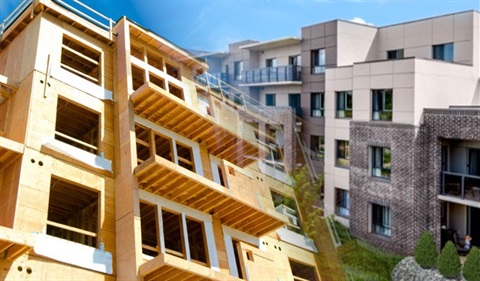
What does tomorrow hold for Maricopa? That question takes center stage at an annual meeting in which the Mayor, City Council and City staff chart a strategic course for both the immediate and distant future. While the forecast for our community’s future continues to be illustrated with bright colors, a special guest speaker warned that looming housing shortages on Arizona’s horizon present a dire challenge if left unchecked.
“This is the biggest threat to the greater economic development viability that we’ve ever run into,” renowned economist Elliot Polack stated at the opening of his presentation.
Pollack , a widely respected and sought after economist and real estate expert, painted a bleak picture of what happens when development stops during times of market slowdowns. According to Pollack, these are periods when housing construction should not only continue, but in fact should accelerate. That’s because while prices or interest rates may prevent new buyers from entering the market today, eventually they won’t. When those buyers surge into the market to compete for minimal inventory, the supply won’t exist and by then it will be too late.
Breaking down the data, Pollack noted that between 2000-2010, over 487,000 housing units were constructed in Arizona. However, in the following decade 2011-2020, only 240,000 housing units were built. While home vacancy rates were initially high in the previous decade, now those numbers have greatly diminished. Pollack says builders have been underbuilding since the recession of 2008 and in the future that will lead to a different type of crisis than we saw back then.
“Prices are going to start to go up like we saw a couple years ago,” he continued. “And when prices go up, the higher-income families will be unable to afford the houses they would have normally purchased. So, they will lower their needs and purchase a home that is a bit smaller. This will trickle down until we get to the lower-income families that will be priced out of a market they were once readily able to afford.”
With limited housing options available, Pollack explained developers will attempt to correct the pattern by building smaller homes on smaller lots creating more housing density and forcing future buyers into purchases they may have avoided under more favorable conditions. This is especially critical to young people who are ready to enter the workforce but can’t find suitable and affordable accommodations to live in.
“It’s affecting your entire community when your essential workers have problems.” Pollack said. “Where are they going to live?”
Pollack suggested this is where multi-family housing and rental options become much more desirable. The rise of innovation in this industry has taken a step above the traditional multi-family housing offerings and now new and upcoming developments feature first class amenities such as tennis courts and full-size gymnasium. Businesses carefully calculate the housing options available for their potential workforce before discussions of future development even begin.
“The presentation made a lot of sense,” said Vice Mayor Richard Vitiello. “We need many different types of housing that we need to grow as a city.”
Housing plays a significant role in our ability to attract retailers, as well as large industrial and manufacturing companies that can open significant and employment opportunities. As such, City staff and elected officials take this into account when considering the future development. Maricopa opened its first apartment complex in October 2021. Since then, many other projects have begun construction, some of which will be opening their doors and providing our community with more housing options later this year.
"I was pleased to hear analyst Elliot Pollock support and reinforce the current home building strategies being executed by Maricopa's developer partners,” said Councilmember Bob Marsh. “Our developers are working at a rapid pace to build luxury, mid-range, and affordable housing to meet the current and future needs of our residents.”
At the heart of Maricopa’s housing strategy is our 2040 Vision followed later by a change to our housing elements within the General Plan[RH3] . This is an extensively researched, resident-driven and voter-approved action guide. Following its directives, city planners work diligently to ensure that we capitalize on the opportunities before us strategically and responsibly. The plan dictates a robust, yet intentional balance of residential, commercial, industrial and other types of development.
"Economic development is very dependent on the city's attitude on growth, especially in a community that has room for significant growth. In other words, if we slow down or postpone new housing, these entities are likely not to be interested in coming,” said Mayor Nancy Smith.
Many of the goals laid out in the General Plan are achievable only with a steadfast commitment to housing. As we increase our inventory, we unlock Maricopa’s ability to break free of its dependence on surrounding communities for employment and retail options. That in turn helps alleviate congestion on roadways, gives the city’s transportation projects higher priority for federal and state support and keeps Maricopa on pace as a thriving and durable community.
As apartments, condominiums, and other forms of multi-family and high-density housing are relatively new to Maricopa, some concerns about the potential impact are customary. While the traditional single family neighborhood will continue to be the norm, there is a growing need for young people just starting their careers to have affordable housing options available and that’s where multi-family housing comes in. Insightful studies from housing industry leaders shed light on many of the common misconceptions about these types of housing.
The National Multi-Housing Council, American Institute of Architects and the Urban Land Institute joined forces to explore some of the frequent myths surrounding high-density housing. Here are just a few of the highlights from their findings:
- Higher-density developments do not lower property values in surrounding areas.
- Higher-density development does not create more regional traffic congestion and in many cases alleviates traffic compared to sprawling single-family developments.
- Higher-density development does not lead to higher crime rates.
You can view the full document by clicking this link.