School Resource Officers
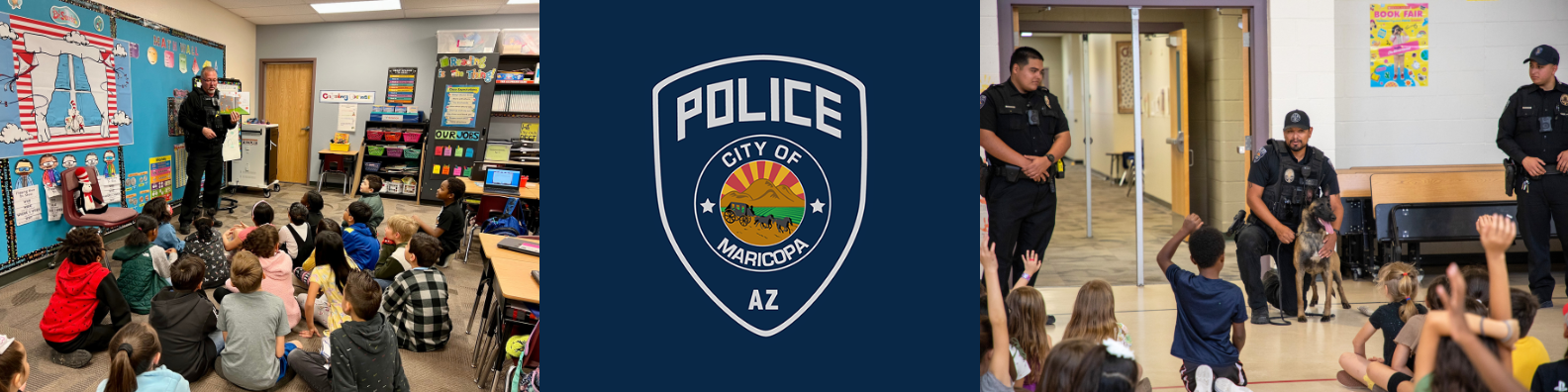
2026-27 School Year SROs
SRO Unit Mission
The SROs provide a specialized service to the parents, students, and staff at the schools they serve.
- They ensure an enforcement presence on campus and take appropriate police action when needed.
- They act as a resource for the school's counseling and attendance staff, routinely engaging with students and assisting those in crisis.
- The officers serve as classroom resources, providing numerous hours of Law-Related Education (LRE) classes throughout the school year, covering topics ranging from substance abuse to constitutional law.
SRO Unit Goals
Each SRO builds strong, supportive relationships with school staff, students, and parents. Our mission is to assist your students and act as positive role models. The Maricopa Police Department SRO Unit is committed to excellence, aiming to be a top SRO Unit in Arizona. We accomplish this by delivering outstanding customer service, cultivating meaningful connections, and providing high-quality education to students and their families. Our focus is on working together with students, families, and school staff to address any issues and help keep our youth out of the criminal justice system whenever possible.
Our dedication is to educate and guide students in making positive choices, helping them to grow into responsible citizens and active community members.
Training
Our SRO’s receive training by the Arizona Department of Education in a partnership with Law for Kids, which is the State of Arizona’s School Safety Program, it allows each SRO to instruct Law Related Education (LRE) classes. Maricopa SRO’s are members of the Arizona School Resource Officers Association (ASROA) and the National School Resource Officers Association (NASRO), which provide training and networking among other SRO’s from across the state and nation
The Maricopa Police Department is training its School Resource Officers (SROs) according to the standards set by the National Association of School Resource Officers (NASRO). This training includes comprehensive education on school safety, legal responsibilities, and effective communication with students. The NASRO program emphasizes the triad concept, which defines the role of SROs as law enforcement officers, educators, and informal counselors. This holistic approach aims to ensure that officers are well-equipped to handle various situations in a school environment, fostering a safe and supportive atmosphere for students and staff. The training covers critical topics such as threat assessment, de-escalation techniques, mental health awareness, and the importance of building positive relationships within the school community.
Community Resources
Anti-bullying Information
Suicide and Crisis
Definition of Bullying in a School Environment
Bullying in a school environment refers to unwanted, aggressive behavior among school-aged children that involves a real or perceived power imbalance. This behavior is typically repeated, or has the potential to be repeated, over time. Bullying can take many forms, including:
Physical Bullying: Involves hurting a person’s body or possessions. Examples include hitting, kicking, pinching, spitting, tripping, pushing, taking or breaking someone’s things, and making mean or rude hand gestures.
Verbal Bullying: Involves saying or writing mean things. Examples include teasing, name-calling, inappropriate sexual comments, taunting, and threatening to cause harm.
Social Bullying: Sometimes referred to as relational bullying, involves hurting someone’s reputation or relationships. Examples include leaving someone out on purpose, telling others not to be friends with someone, spreading rumors about someone, and embarrassing someone in public.
Cyberbullying: Involves bullying that takes place over digital devices like cell phones, computers, and tablets. Examples include sending, posting, or sharing negative, harmful, false, or mean content about someone else. It can include sharing personal or private information about someone else causing embarrassment or humiliation.
Bullying can cause significant emotional and psychological distress, impacting a student’s ability to focus on learning and participate in school activities. It creates an unsafe and hostile learning environment, and addressing it promptly and effectively is crucial for the well-being of all students.